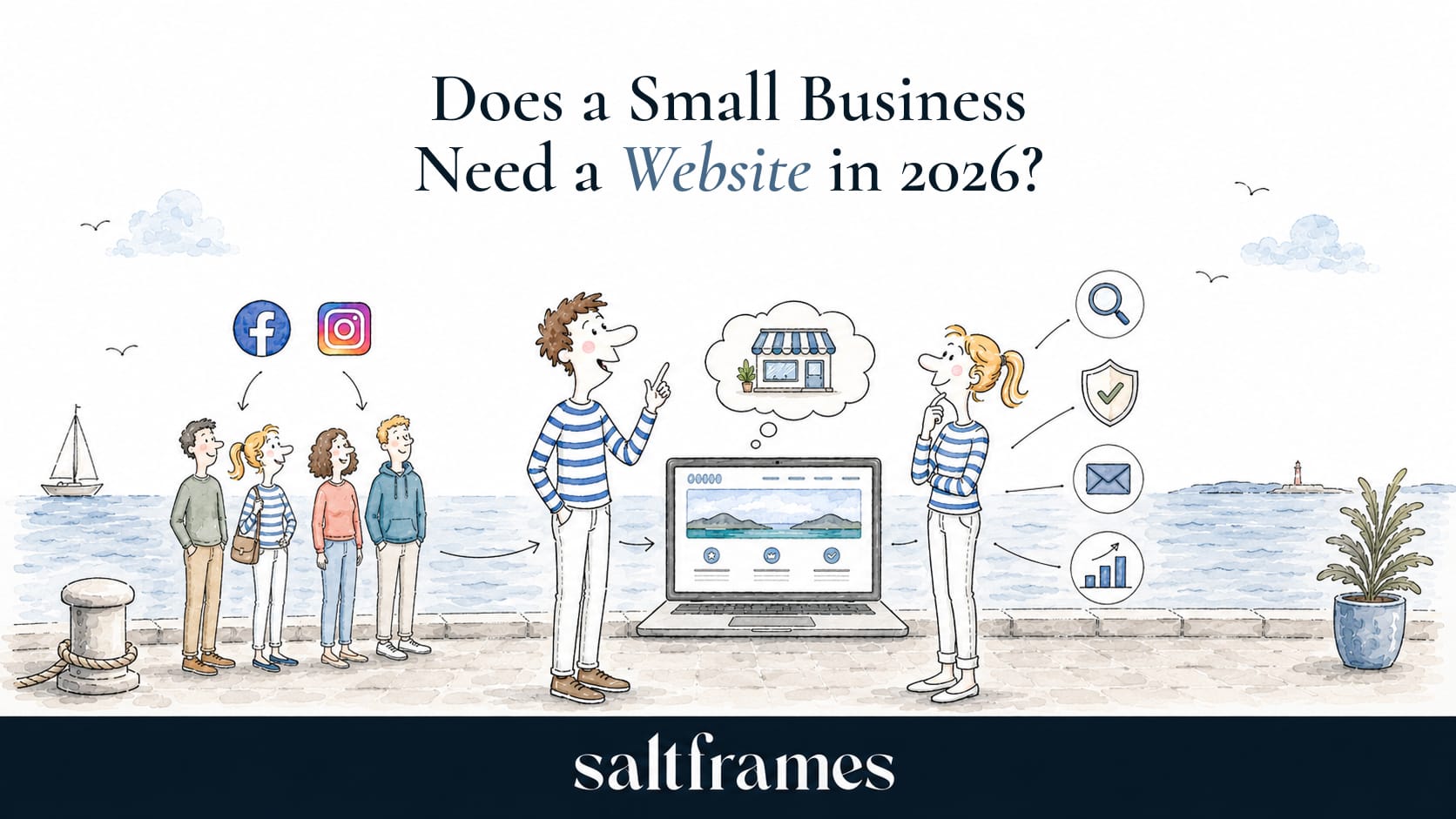
In the age of social media, many small business owners ask a perfectly reasonable question:
"If I already have a Facebook and Instagram page, do I really need a website?"
On the surface, the answer may seem unclear. Social media offers fast communication with your audience, easy content publishing, and direct reach to potential customers.
But when it comes to long-term business growth, building client trust, and attracting new customers through Google search, a professional website remains one of the most valuable digital assets any business can have.
At Saltframes, we work with small and medium-sized businesses that want to build a sustainable online presence through professional website development built around real business outcomes. Here is why it matters.
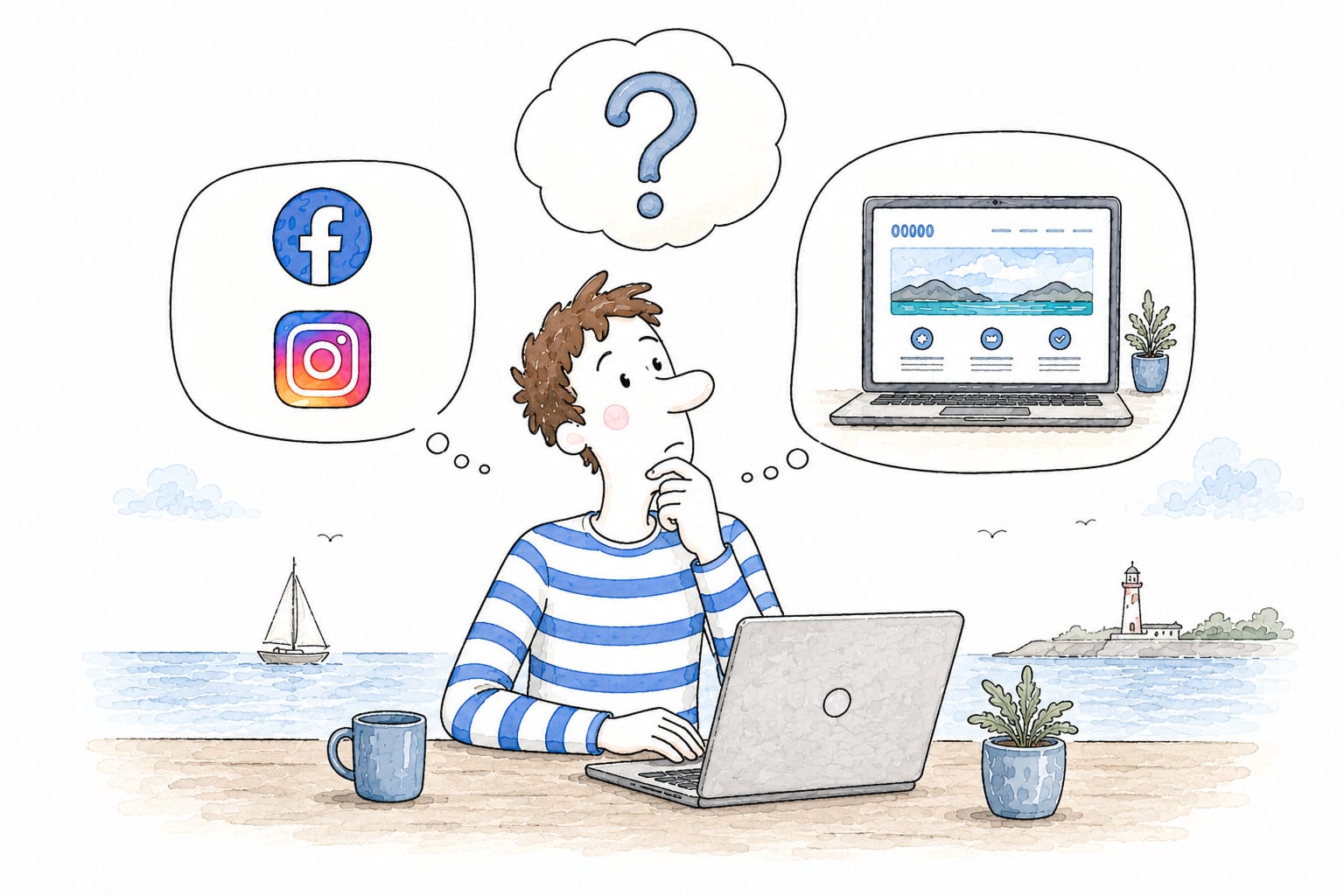
Consumer behaviour is changing - but trust remains the deciding factor
Today's customers have access to more information and more choices than ever before. Before reaching out to a business, they almost always do their own research first.
They look up the company, browse past projects, compare providers, and try to determine who they can trust. For many potential clients, your website is their first real encounter with your business.
Before a single conversation, enquiry, or office visit, they have already formed an opinion. That is why a well-designed business website is far more than a digital business card. It is a tool for building trust and projecting professionalism.
Why social media is not your own channel
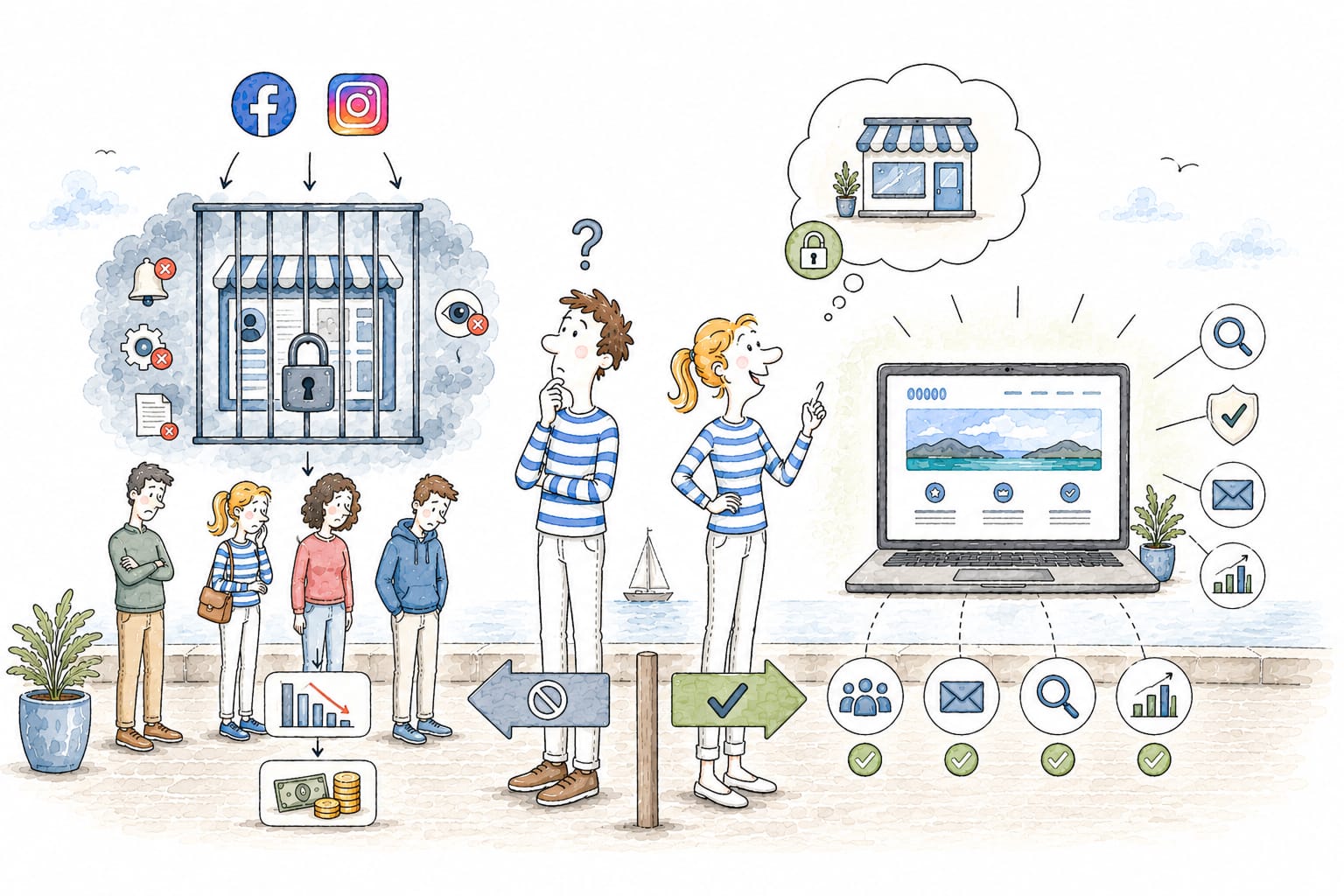
Social media is a genuinely powerful communication tool. It helps build an audience, generate brand awareness, and maintain relationships with customers.
But there is one fundamental problem.
Your business profile does not belong to you.
It exists on a platform owned by another company. That means you have no control over:
- the algorithm that decides who sees your content;
- the rules that govern what you can post;
- how your content is displayed or ranked;
- the reach of your posts and updates.
Over recent years, platforms have repeatedly changed how content reaches audiences. Many businesses that once had strong organic reach are now forced to pay for advertising just to stay visible to the same followers they already had.
A website is different. It is a digital asset you genuinely own and control.
What happens if your profile gets suspended?
This is a risk that many businesses underestimate. It can happen for a variety of reasons:
- an automated security flag;
- an unintentional rule violation;
- a compromised account;
- loss of access to login credentials;
- platform-side technical issues.
In any of these scenarios, a business can lose access to its entire audience within minutes. For companies that rely exclusively on social media, this can result in:
- broken communication with existing clients;
- lost enquiries and potential sales;
- deleted content and post history;
- suspended advertising campaigns.
When a business has its own website, it always has an independent channel through which clients can find and contact it - regardless of what happens on any social platform.
Why Google still brings clients in 2026
Social media creates interest. Google captures intent.
This is one of the most important distinctions between the two channels. When someone scrolls through Facebook or Instagram, they are mostly consuming content passively. When they open Google and type a specific search, they already have a need - they are looking for a solution, a service, a product, or a business.
That is why visitors from organic search are often much closer to making a decision. They are not browsing - they are actively looking for an answer to a specific problem.
This is exactly why strong search engine optimisation (SEO) and professional website design continue to be among the most effective ways to attract new clients online.
A website builds trust
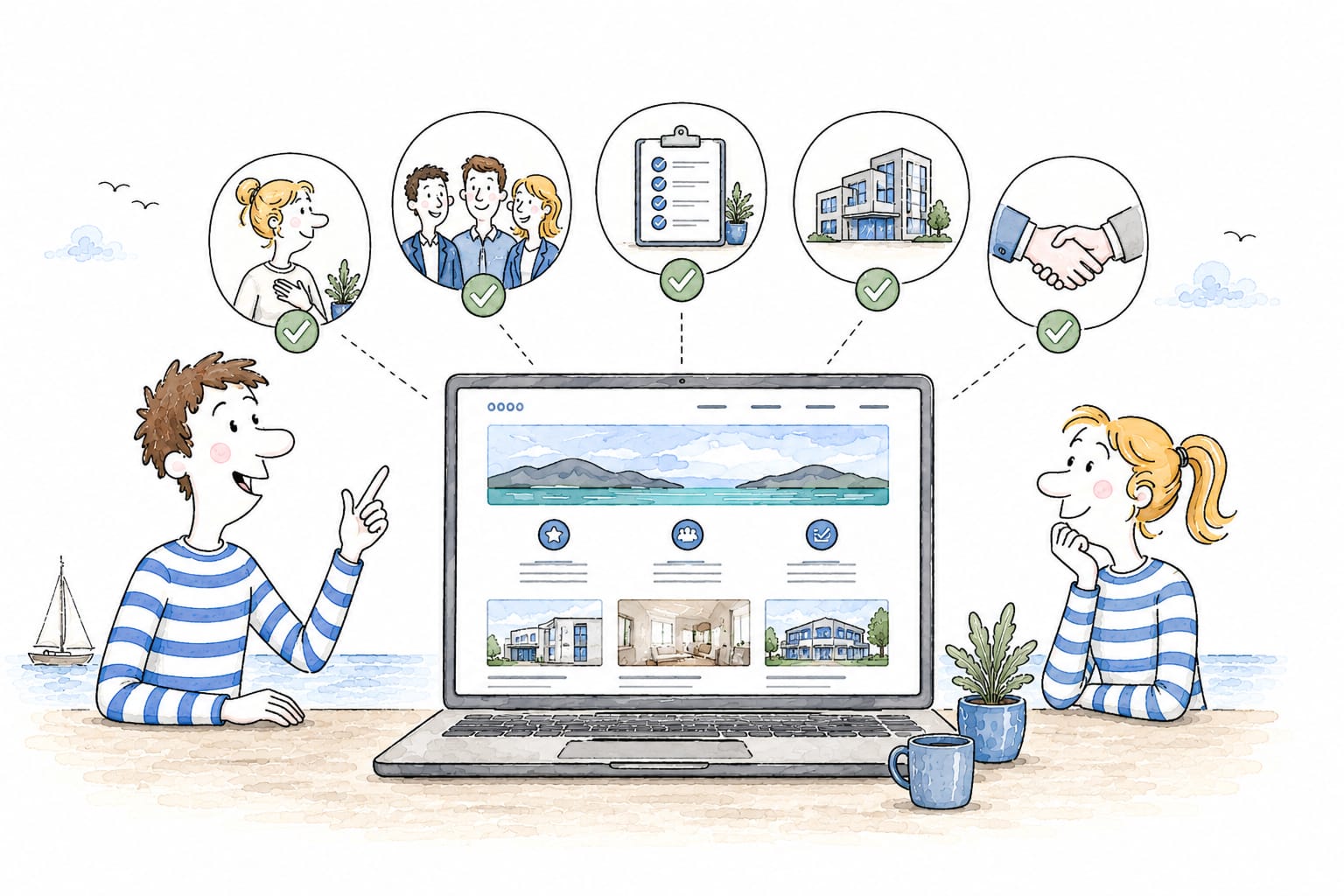
Trust is the currency of modern business. Whether you offer services, products, or consultancy, clients want to know who they are working with.
A well-structured website allows a business to present:
- its story and background;
- the team behind the work;
- its services in detail;
- past projects and case studies;
- its approach and working process.
This creates transparency. And transparency creates trust.
Unlike social media - where information is scattered across posts, photos, and comment threads - a website brings everything that matters into one place. It gives potential clients a clear and organised picture of what your business is and what it can do for them.
If you are considering building a new business website or refreshing an existing one, take a look at our website development services.
Your website works around the clock
While the working day ends, your website keeps working. It can:
- receive enquiries at any time of day;
- capture new leads while you sleep;
- present your services clearly and completely;
- showcase your portfolio;
- answer frequently asked questions;
- support the sales process.
Whether it is a weekday morning or a Sunday evening, potential clients can find the information they need and take the next step - on their own schedule, at their own pace.
This makes a website one of the most cost-effective and consistent tools for business growth. If you have a project in mind, feel free to get in touch through our contact page.
Why SEO still matters
Google rewards websites that create genuinely helpful, high-quality, user-focused content. When a website is built correctly and offers real value to visitors, it can attract organic search traffic for years.
Unlike paid advertising campaigns that stop the moment your budget runs out, well-optimised content continues to work long after it is published. It competes and compounds over time.
This makes a website not just a marketing tool, but a long-term investment in the growth and visibility of your business.
How your website and social media work together
One of the most common misconceptions is that you need to choose between a website and social media. In reality, the best results come when both channels work in tandem.
Social media:
- captures attention and creates awareness;
- builds and grows your audience;
- generates brand recognition;
- drives engagement and conversation.
Your website:
- builds credibility and trust;
- presents your business in full detail;
- collects enquiries and leads;
- supports the sales process;
- attracts clients directly from Google.
Social media can bring visitors to your brand. Your website is where they decide whether to become your client.
When both work together, the result is a stronger online presence and a better return on every marketing effort you make.
What is the cost of not having a website?
Many small business owners think of website development as an expense. In reality, the more important question is: what is the cost of not having one?
Every day, potential clients search for services, products, and solutions on Google. If your business does not have a professional website, a significant proportion of those people will never find you - or will choose a competitor who does have one.
The absence of a business website commonly leads to:
- missed enquiries and lost leads;
- lower perceived credibility and professionalism;
- over-reliance on social media and paid advertising;
- poor visibility in Google search results;
- lost revenue to competitors with a stronger online presence.
While advertising campaigns only work as long as the budget lasts, a well-built website can attract visitors and clients for years - often with very little ongoing investment.
A professional business website is not just a marketing asset. It is an investment in the long-term growth and sustainability of your business.
Saltframes Studio
Ready to build a professional online presence?
Whether you're launching a new business or refreshing your existing site, a well-built website can help you reach more clients and build stronger brand credibility.
Conclusion
In 2026, social media is an important part of any business's digital presence. But it cannot fully replace a professional website.
A website remains the only digital asset a business truly owns and controls. It builds trust, improves Google search visibility, supports SEO, captures enquiries, and creates a stable foundation for long-term growth.
So the question is no longer whether a business needs a website. The more relevant question is:
What opportunities is it missing without one?
If you are looking for a trusted partner for professional website development that represents your business effectively and attracts potential clients, the Saltframes team is here to help. Contact us - we would love to hear about your project.